











When venturing into the world of custom t-shirt printing, plastisol vs direct to film (DTF) is one of the questions that still raises itself: which is the more prudent option?
To business people carefully watching costs of production, or designers on the hunt for flawless detail and resplendent color, both processes are tempting at first glance. The wording is not simply between film and ink—it's between how you want your t-shirt business to develop, what kind of designs you'll create, and what kind of experience you want to give your customers.
Plastisol transfers have been around for a long time, and screen printers are comfortable using plastisol for their durability and aggressive prints. DTF printing is a new technology that is gaining traction quickly because of how easy it is to use, how vibrant it looks, and how versatile it is.
Here, we are going to compare the two technologies in detail—cost, quality, durability, design freedom, and eco-friendliness—to assist you in making a right decision. We will also highlight why small and medium-sized businesses are converting to DTF printers.
What is Plastisol Transfer Printing?
Plastisol transfers are founded on traditional screen printing. Transferring plastisol inks through a stencil onto transfer paper and then heat pressing onto the garment follows.

Benefits of Plastisol Transfers
Durable and flexible prints that last through many wash cycles.
Cost-effective for bulk orders, especially for simple graphics.
Ability to create special effects like glitter, puff, or metallic inks.
Drawbacks of Plastisol Transfers
Requires screen setups, chemicals, and inks, which increases labor.
Not efficient for short runs or one-off designs.
Limited detail when printing highly intricate or photo-like images.
Plastisol is great for bigger, bolder, and simpler designs - but it can slow down small companies looking for speed and flexibility.
What is DTF Printing?
DTF printing uses digital technology to print designs directly onto PET film. The film is coated with hot-melt powder, cured, and then heat-pressed onto the fabric.

Advantages of DTF Printing
Vivid, full-color designs with photo-quality detail.
Works on cotton, polyester, blends, and more.
Low setup time—no screens or messy inks.
Fast turnaround for small runs or custom jobs.
Eco-friendlier process with less chemical use and reduced waste.
Drawbacks of DTF Printing
- Requires an initial investment in a DTF printer and consumables (film, powder).
For shops that want versatility and efficiency, DTF offers modern solutions that plastisol can’t easily match.
Plastisol vs Direct to Film:
Cost
- Plastisol: Lower costs upfront but becomes more costly for smaller orders, since every design has to have its own screen.
DTF: Higher upfront investment (printer, film, powder), but significantly cheaper per print for short runs and custom designs.
Print Quality & Durability
Plastisol: Soft and flexible but durable prints, but less detailed.
DTF: High-quality, high-resolution, photo-quality prints that are resistant to peeling, cracking, or fading.
Design Flexibility
Plastisol: Good for solid color bold designs in high volumes.
DTF: Capable of multiple color designs, gradients, fine artwork and lower volume specialty work.
Environmental Impact
Plastisol: Uses chemicals and inks based on PVC with greater waste treatment difficulty.
DTF: Less chemical, less water, and reusable waste output—therefore more environmentally friendly.
Workflow & Business Efficiency
One of the biggest differences in the plastisol vs DTF printing debate isn’t just in print quality—it’s in how each method impacts your day-to-day workflow.
With plastisol transfers, every new design requires significant prep work:
Burning a screen: 30–60 minutes per design
Mixing inks: 15–20 minutes
Aligning screens & test prints: 30–60 minutes
Cleanup after printing: 1–2 hours
In total, you can easily spend 2–4 hours of setup time before the first shirt is even pressed. That’s fine if you’re printing 500 shirts, but it makes small custom orders unprofitable.
By contrast, DTF printing eliminates screen setup entirely. Once your design is ready on the computer, you can send it to print immediately:
File prep & RIP software setup: 5–10 minutes
Printing to film & powder curing: 15–30 minutes
Heat pressing: 1–2 minutes per garment

A shop can start and finish a 10–20 shirt order in under an hour, which would take half a day with plastisol.
This streamlined workflow also affects scalability:
Plastisol scales only with bulk jobs, where long setup time can be spread across hundreds of prints.
DTF is scalable at every level—whether it’s one shirt for a birthday gift, 50 shirts for a local team, or 200 shirts for a corporate event, the prep time stays minimal.
For business owners, that means stronger ROI (Return on Investment). DTF lets you accept smaller, high-margin jobs without losing time, while still handling mid-sized orders efficiently. Instead of spending hours on setup for each design, you can run multiple client jobs in a single day.
In short, DTF saves hours of prep, maximizes production time, and makes every order profitable—something plastisol can’t match.
Workflow Step |
Plastisol Transfers |
DTF |
Design Prep |
30–60 min (burning screens, setting up stencils) |
5–10 min (file setup in RIP software) |
Ink Mixing |
15–20 min per color |
Not required |
Test Prints & Alignment |
30–60 min |
5–10 min |
Printing/Film Prep |
N/A (direct to garment after setup) |
15–30 min (print film + apply powder + curing) |
Heat Pressing |
1–2 min per shirt |
1–2 min per shirt |
Cleanup |
1–2 hours (screens, squeegees, chemicals) |
Minimal (wipe printer head, replace film roll) |
Total Setup Time |
2–4 hours before first print |
20–40 min before first print |
Which Method is Right for You?
When choosing between plastisol vs direct to film, think about your business model:
Choose Plastisol if you:
Specialize in large-volume runs with bold, simple designs.
Want lower upfront costs and already have a screen-printing setup.
Choose DTF if you:
- Handle custom orders, small runs, or intricate designs.
- Need fast turnaround with fewer setup steps.
- Want to expand into more fabric types.
- Care about eco-friendlier processes.
Feature |
Plastisol Transfers |
DTF |
Upfront Investment |
Lower – requires screens, inks, and press setup |
Higher – requires a DTF printer, film, and powder |
Cost per Print |
Higher for small runs; efficient only at large volumes |
Lower for small runs; cost-effective even for one-offs |
Print Quality |
Bold, solid colors; limited detail |
High-resolution, vibrant, full-color with gradients |
Durability |
Long-lasting, flexible, withstands washes |
Resistant to peeling, fading, and cracking |
Design Flexibility |
Best for simple graphics or spot colors |
Perfect for detailed, multi-color, and photographic designs |
Fabric Compatibility |
Works mainly on cotton and blends |
Works on cotton, polyester, blends, nylon, and more |
Setup & Workflow |
Labor-intensive (screens, chemicals, cleanup) |
Fast digital workflow with minimal setup |
Turnaround Speed |
Slower for custom/small orders |
Quick production, ideal for small-batch jobs |
Special Effects |
Can add puff, metallic, glitter |
Limited but improving with new films and inks |
Environmental Impact |
Higher – PVC inks, more waste, chemical-heavy |
Lower – less waste, fewer chemicals, recyclable films |
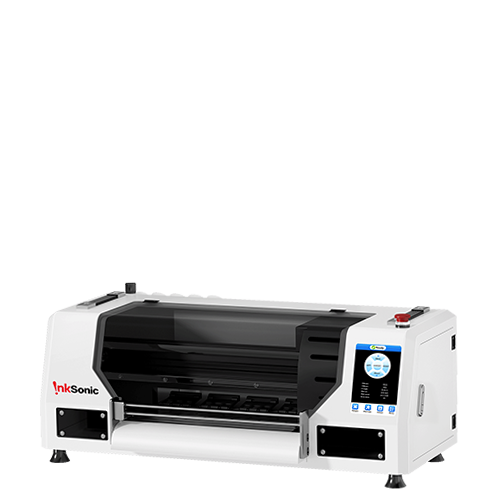
Upgrade to DTF Printing
For many apparel businesses today, DTF printers strike the right balance of efficiency, quality, and profitability. By removing the need for screens and chemicals, DTF allows even small shops to compete with larger print houses.
The InkSonic DTF printer lineup is designed with business growth in mind:
High-definition printing (up to 2800×720 dpi) for photorealistic, intricate graphics.
Dual-head options for 150% faster print speed.
Frugal design reduces waste and simplifies workflows.
Reliable performance whether you side hustle or build a full-time business.

If you're looking to go beyond the limitations of plastisol transfers, an XP600 DTF printer will allow you to produce high-quality, long-lasting prints on a huge range of fabrics—with less effort.
Conclusion
The plastisol vs direct to film debate boils down to this:
Plastisol is great for bulk orders and simple graphics.
DTF is unbeatable for flexibility, detail, and small to medium-scale production.
For most modern t-shirt businesses, the advantages of DTF far outweigh the disadvantages. With the right printer, you can streamline production, enhance design possibility, and produce prints your clients will love.
Begin your upgrade today with the InkSonic A3+ XP600 DTF printer and elevate your custom apparel enterprise to a new level.


